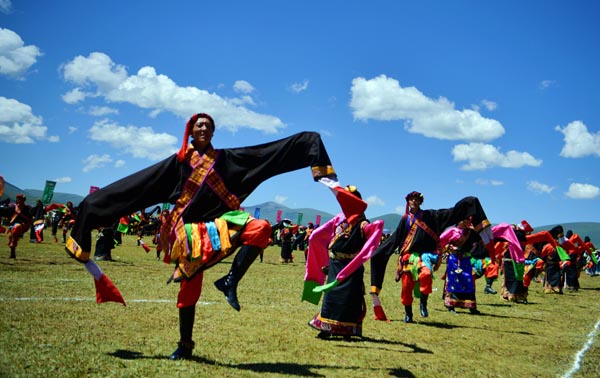
Guozhuang Dance
Introduction
Guozhuang Dance is a traditional Tibetan group dance and singing performance distinguished by its vibrant displays and deep cultural roots. Known for its unique style, Guozhuang is performed extensively across the Tibetan regions of China, including Yunnan, Qinghai, Sichuan, Gansu provinces, and the Xizang autonomous region.
This dance form is recognized as a national intangible cultural heritage, reflecting its importance in preserving the cultural identity and traditions of the Tibetan people. Characterized by its lack of instrumental accompaniment, Guozhuang relies on complex vocal harmonies and intricate dance steps, which makes it a challenging art form to master.
The dance often takes place during social gatherings, festivals and weddings, where performers, dressed in traditional attire, engage in song "battles" that can last for hours or even days. These performances serve not only as entertainment but also as a means of cultural expression and communication within the community.
Performance Characteristics
Guozhuang Dance is known for several distinctive characteristics that make it a unique cultural expression. These include its dance movements, music and instruments, costumes and props. Each of these elements contributes to the overall performance, enhancing its visual and auditory appeal.
The dance movements in Guozhuang are typically circular or linear, with participants forming lines or rings. The choreography includes a series of synchronized steps, hand gestures and body movements that are performed in harmony with the singing. The movements are often symbolic, accompanied by vocalizations rather than instrumental music, requiring performers to have strong vocal skills and an understanding of traditional Tibetan tunes and lyrics.
Costumes play a significant role in Guozhuang Dance, enhancing the visual impact of the performance. Performers typically wear traditional Tibetan attire, which can range from simple outfits to elaborate costumes adorned with accessories made of gold, silver, coral or turquoise. Props are minimal in Guozhuang Dance, with the focus being on the performers' movements and the dynamic interaction between participants.
Cultural Significance
Guozhuang Dance holds significant cultural and social meaning within Tibetan communities. Traditionally, it serves as a medium for expressing respect and reverence for nature, a theme deeply embedded in Tibetan cultural practices. The dance allows participants to convey emotions, share personal stories, and engage in social interactions through song and movement. Notably, the dance is not restricted to formal occasions; it is woven into the fabric of daily life, often performed in public squares for fitness and enjoyment.
Preservation and Promotion
Efforts to preserve and promote Guozhuang Dance are underway at various levels, from community initiatives to government-supported programs. Local governments have taken steps to document and record traditional Guozhuang songs and dance routines, creating archives that serve as educational resources for future generations. These records are instrumental in ensuring that the dance's heritage is not lost to time and that aspiring performers have access to authentic materials for learning.
Guozhuang Dance remains a vibrant and integral part of Tibetan culture, offering a window into the rich traditions and communal spirit of the Tibetan people. As it continues to evolve and adapt to modern contexts, the dance serves as a testament to the resilience and creativity of those who seek to preserve and celebrate their cultural roots.








